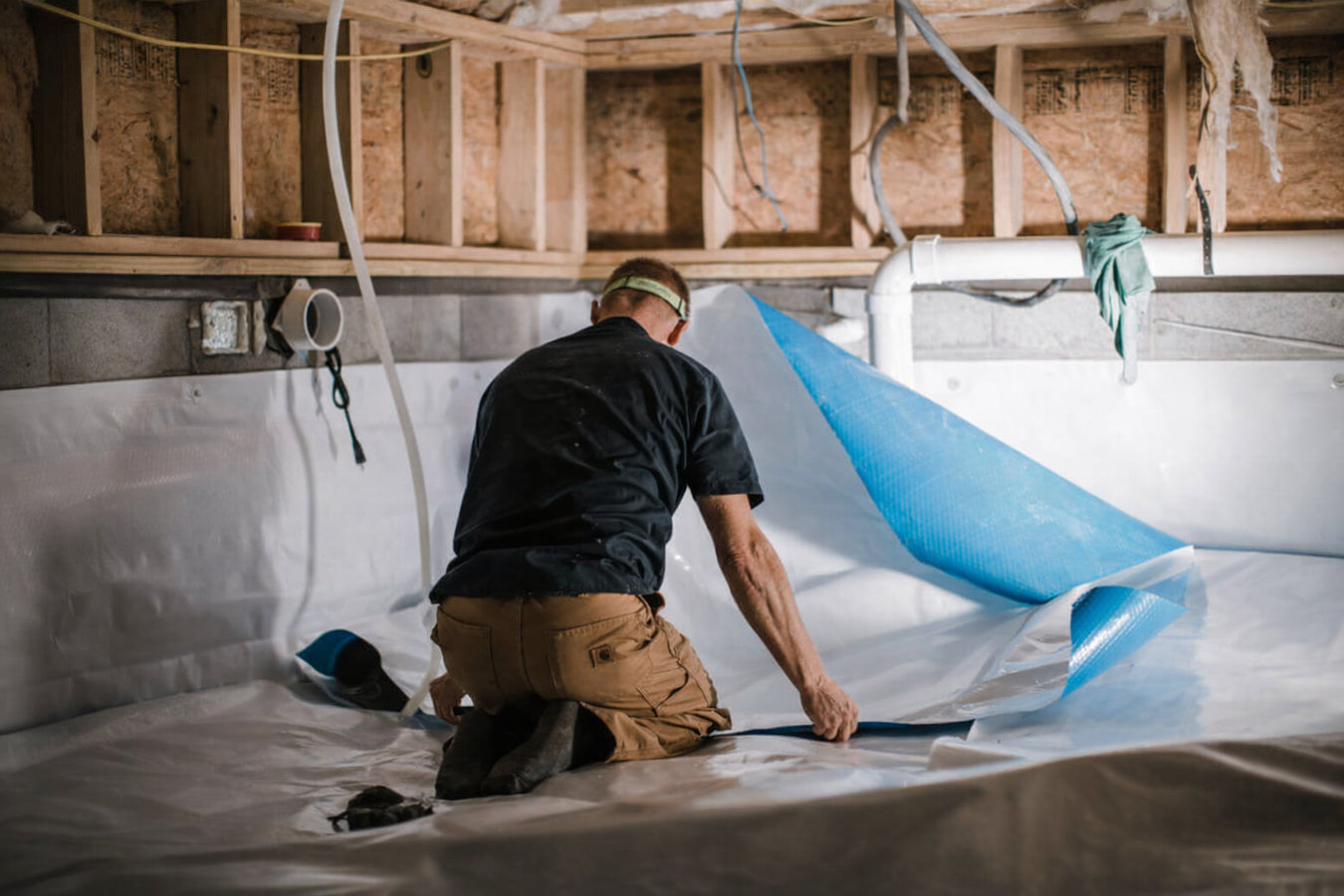
Bare soil under your home releases moisture year-round. That moisture works into your floor joists, subfloor, and insulation - causing rot, mold, and rising energy bills. A properly installed vapor barrier stops it at the source.
A crawl space vapor barrier in Brownwood, TX is a thick plastic sheet installed on the floor of your crawl space to block ground moisture from rising into your home - most jobs are completed in a single workday for a standard house.
Without a barrier, moisture from bare soil soaks into your floor joists, insulation, and subfloor over time. In Brownwood, where summer humidity and clay soils hold water close to the surface, that process happens faster than in drier climates. You may already notice it as a musty smell, soft spots in your floor, or higher cooling bills. A vapor barrier addresses the root cause - not just the symptoms.
This service pairs naturally with crawl space insulation, which stops heat and cold from passing through the floor - adding both moisture protection and thermal performance to the same space.
A persistent earthy or musty odor - especially in rooms over the crawl space - is one of the most common early signs of moisture buildup below. In Brownwood, that smell tends to get worse between June and September when heat and humidity push ground moisture upward. If it comes and goes with the weather, ground moisture is almost certainly the cause.
If you notice a spot on your floor that has a little give when you walk on it, moisture may have already started working on your floor joists or subfloor. This is especially common in older Brownwood homes built before the 1990s, where crawl spaces were left open to bare ground for decades without any protection.
After a heavy rain - especially the kind that follows a dry stretch, which is common in Brown County - peek into your crawl space if you can safely do so. If you see wet soil, puddles, or water stains on the foundation walls, your crawl space is taking on moisture that has nowhere to go except up into your home's structure.
Pest inspectors in Central Texas routinely flag damp crawl spaces because moist soil is exactly what subterranean termites need. The Texas A&M AgriLife Extension identifies Central Texas as a high-risk zone for termites that thrive in moist soil. If an inspector has mentioned moisture under your house, a vapor barrier should be next on your list.
We start every job with an assessment of your crawl space - checking the size, the soil condition, whether there is any standing water or existing barrier material, and how healthy your floor joists and subfloor look. From there, we recommend the right approach for your specific home. A basic barrier covers the ground floor only, which is the right solution for most Brownwood homes with manageable moisture levels. For homes with persistent dampness or mold history, we discuss vapor barrier installation that extends up the foundation walls for a more complete seal.
We use heavy-duty sheeting - typically 10 to 20 mils thick - rated for the sustained moisture exposure that Brownwood's clay soils produce. Seams are overlapped and taped, and the material is secured to the foundation walls around the full perimeter. The barrier is effective immediately after installation - no curing time needed. We finish every job with a walkthrough so you can see exactly what was done before we leave.
Best for homes with manageable moisture levels - covers the entire crawl space floor to block ground vapor from rising into the structure above.
Best for homes with persistent dampness or past mold issues - extends barrier coverage up the foundation walls for a more complete moisture seal.
Best when the crawl space has accumulated debris over the years - we clear and prep the surface so the barrier lays flat and seals properly from day one.
Best for homes with aging or torn plastic already in place - old material is removed and replaced with a heavier-duty barrier suited for Brownwood's seasonal moisture cycles.
Brownwood sits in the Texas Hill Country transition zone, where summer temperatures regularly exceed 95 degrees F and humidity spikes during storm season from May through September. That heat and humidity combination pushes ground moisture up through bare soil into crawl spaces faster than in drier climates. The clay soils throughout Brown County hold water long after rain events - giving moisture more time to work its way up into floor joists and insulation. For Brownwood homeowners, a vapor barrier is one of the most practical things you can do to protect your floors and keep your cooling costs manageable.
Many homes in Brownwood's established neighborhoods - particularly those in areas like Early, TX and Coleman, TX - were built in the 1950s through 1980s with vented crawl spaces and no ground cover at all. That was standard practice at the time, but those homes have now been accumulating moisture exposure for decades. If your home falls in that age range and you have never had the crawl space inspected, a free assessment is the place to start.
We will ask a few basic questions about your home and any problems you have noticed. Most calls are answered the same day, and we respond to online requests within one business day.
We access your crawl space and check the size, soil condition, existing materials, and whether there is standing water or mold. This visit is typically free and takes less than an hour - you will get a real price estimate before we leave.
We walk you through what we found and what we recommend. The estimate is written and itemized. You are under no obligation - take your time and compare quotes if you want to.
The crew clears debris, rolls out and tapes the heavy-duty sheeting, and secures edges to the foundation walls. Before leaving, we show you the finished work - photos or a walkthrough - so you know exactly what was installed.
Free assessment, written estimate, no obligation. We serve Brownwood and all of Brown County.
(325) 510-3392Brown County's expansive clay soils shift with every wet and dry cycle, which puts extra stress on barrier material over time. We account for that by using heavier-duty sheeting and securing edges more firmly than a contractor unfamiliar with local conditions would. That is what makes the work hold up year after year in this specific climate.
Every job starts with a free on-site assessment and a written estimate that spells out the work, the materials, and the total cost. We document the before-and-after condition of your crawl space, so the work done on your home is on record if anything ever needs to be revisited.
A large share of Brownwood's housing stock was built before 1980 - many of those homes have never had a vapor barrier installed. We understand what to expect when accessing older crawl spaces: uneven floors, tight access points, and soil that has been exposed for decades. We come prepared for what we will actually find, not what a textbook says should be there.
Crawl space work is invisible once the hatch is closed, and a lot of homeowners worry about verifying what was actually done. We finish every job with a walkthrough or photos so you can confirm coverage, sealed seams, and wall attachment yourself - before we collect payment and leave your driveway.
These proof points come together in a simple way: we do the work we say we will do, we do it to a standard that holds up in Brownwood's specific climate, and we show you the result before we leave. That is the baseline every homeowner deserves.
Full vapor barrier installation covering crawl space floors and walls for homes with persistent moisture or a history of mold.
Learn MoreInsulation for the crawl space floor system that stops heat and cold from passing through - pairs with a vapor barrier for complete protection.
Learn MoreBrownwood's summer humidity season is the hardest stretch for unprotected crawl spaces - call now before the heat arrives and protect your floors before moisture damage sets in.