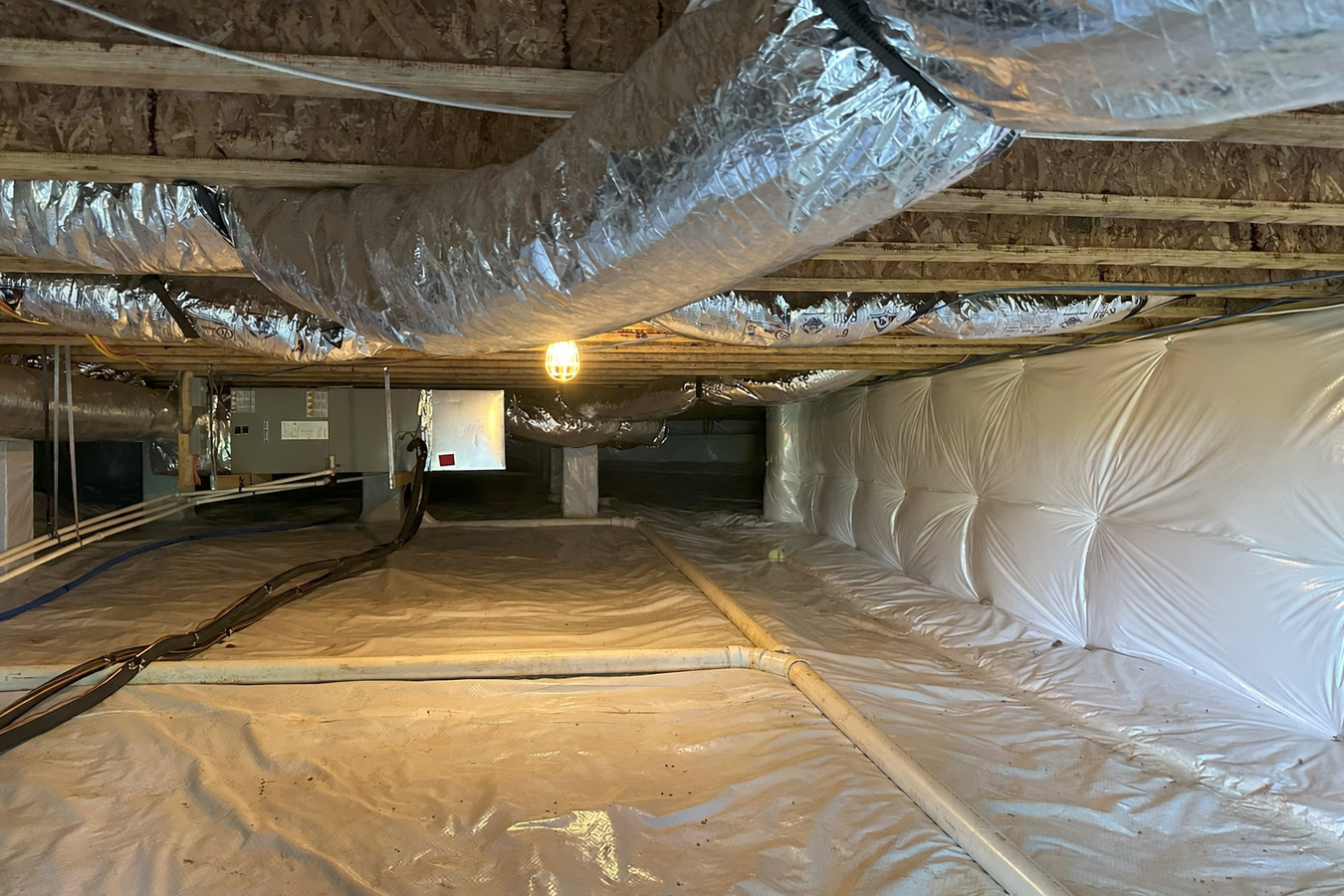
Cold floors in winter and high cooling bills in summer often trace back to an uninsulated or failing crawl space. We seal and insulate the space under your home so it stops working against you.
Crawl space insulation in Brownwood acts as a thermal barrier between the ground beneath your home and the floors above, most jobs take one to two days and pair insulation with a ground moisture barrier to address both heat loss and the humidity that Central Texas clay soils introduce year-round.
If you walk across your kitchen floor on a cold January morning and it feels cold through your socks, or if your energy bills spike every summer and you cannot explain why, the crawl space under your home is likely part of the problem. Brownwood winters can bring overnight lows in the low 20s, and without insulation under the floor that cold travels straight up into your living spaces. Summer works the same way in reverse - heat radiates up from the uninsulated ground and makes your air conditioner work harder than it should. Many homeowners pair crawl space insulation with our wall insulation service for a more complete thermal envelope upgrade, and some add a crawl space vapor barrier to address moisture at the same time.
A significant portion of Brownwood homes were built before 1990, when crawl space insulation standards were much lower than they are today. Many were constructed with little or no insulation under the floor at all. If your home is in that range and you have never had the crawl space addressed, there is a good chance it is costing you money every month.
If your living room or kitchen floor feels cold underfoot on a January morning, that is a strong sign the crawl space below has little or no working insulation. Brownwood winters can dip into the low 20s, and that cold travels straight up through the floor framing when there is nothing blocking it. This is one of the most common complaints homeowners describe before having the work done.
Brownwood summers are long and hot, and air conditioning is a major share of most households' electricity costs. If your system runs almost constantly during July and August, poor crawl space insulation may be part of the reason. Heat from the ground enters through an uninsulated crawl space and makes your AC work harder every single day of the cooling season.
A musty or earthy odor coming from floor vents or low areas of the home is often a sign of moisture buildup in the crawl space. Brownwood's clay soils release humidity year-round, and that moisture can damage insulation and eventually affect the air quality in your living spaces. It is a warning sign worth taking seriously.
Take a look with a flashlight through your crawl space access hatch. Insulation that is hanging down, has turned dark or discolored, or is missing in sections is no longer doing its job. This kind of damage is especially common in Brownwood homes that have had plumbing or HVAC work done under the house over the years.
Every crawl space insulation project starts with an honest assessment. We access the space and look at what is actually there - the condition of any existing insulation, any moisture or pest issues, the size and accessibility of the space, and what approach makes the most sense for your home. You get a written estimate based on what we find, not an estimate based on a phone call. If old insulation needs to come out first, that work is coordinated so you are not left with an uninsulated home between steps.
We seal gaps around pipes, ducts, and other openings before laying insulation, because gaps in the air barrier cancel out much of the insulation benefit. In Brownwood, we typically recommend pairing insulation with a ground moisture barrier on the crawl space floor - the clay soils in Brown County release enough humidity to degrade insulation over time without one. This all connects naturally to our wall insulation work when homeowners want to address the full thermal envelope, and to our crawl space vapor barrier service when moisture control is the primary concern.
Best for homes where insulating between the joists above the crawl space floor is the right fit based on layout and access.
Suited for homes where sealing the crawl space walls and conditioning the space performs better than floor-only insulation.
Recommended for most Brownwood homes given the clay soil conditions - a thick plastic barrier laid on the dirt floor blocks moisture before it can damage insulation.
For homes where existing insulation has sagged, been damaged by pests, or is no longer functional - we clear it out before installing new material.
Brownwood's climate creates a two-season problem for crawl spaces. Summer highs regularly exceed 95 degrees F, and winters can dip below 20 degrees - so your crawl space insulation needs to work hard in both directions, all year. The expansive clay soils throughout Brown County compound the challenge. Those soils absorb water when it rains and release it as they dry, pushing humidity into crawl spaces continuously. That moisture cycle can degrade insulation over time and create conditions that attract pests, including the subterranean termites that are common in this part of Central Texas. A good crawl space insulation installation in Brownwood accounts for both the thermal and moisture challenges - not just one or the other.
We work across the region, including in Coleman, TX and Comanche, TX, where older housing stock and similar soil and climate conditions are just as common as they are in Brownwood proper. The Texas A&M AgriLife Extension notes that Central Texas falls within a zone of high termite activity - another reason to inspect crawl spaces carefully before installing new insulation. The best time to schedule crawl space work in Brownwood is fall or early spring, before peak heat or a winter freeze, when contractor availability is better and scheduling is faster.
We ask a few basic questions - the age of your home, whether you have noticed any specific problems, and whether you know if the crawl space has been insulated before. We reply within one business day and schedule an on-site visit at a time that works for you.
We access the crawl space and check the condition of any existing insulation, look for moisture or pest issues, measure the space, and note any access challenges. This visit usually takes 30 to 60 minutes and ends with a written estimate that breaks down what work is recommended and why.
The crew removes old or damaged insulation if needed, seals gaps around pipes and ducts, installs new insulation, and lays a ground moisture barrier if included in your project. The work is done entirely under your home, so disruption inside is minimal. Most jobs are completed in one day.
Before we leave, we walk you through what was done. There is no curing or drying period needed, so your home is fully usable immediately. Most homeowners notice a difference in floor comfort and energy use within the first billing cycle after installation.
Free estimate, no obligation. We reply within one business day.
(325) 510-3392Brown County's expansive clay soils push moisture into crawl spaces year-round. We account for this on every project - recommending a ground moisture barrier as a genuine necessity here, not an upsell. Insulation installed without addressing the moisture loses its effectiveness faster than it should.
Central Texas has high termite pressure, and crawl spaces that retain moisture are especially attractive to subterranean termites. We inspect for signs of pest activity or wood damage before installing new insulation. Insulating over an active pest problem does not fix it - it hides it.
The U.S. Department of Energy's guidance is clear: air sealing and insulation work together. We seal gaps around pipes and ducts every time before insulation goes in. Skipping that step is a common shortcut that costs homeowners money within a few years. U.S. Department of Energy
Every project gets a written estimate that breaks down what is recommended and why - including what is essential versus optional for your specific home. We do not add charges without your approval, and we do not pressure you to sign on the spot.
Crawl space work done right in Brownwood means treating the moisture and the thermal problem together, not just laying insulation and calling it done. That is the difference between a job that holds up for 20 years and one that needs to be redone in five.
Address the full thermal envelope by insulating exterior walls alongside your crawl space for maximum comfort and energy savings.
Learn MoreA dedicated vapor barrier controls ground moisture in Brownwood crawl spaces, protecting insulation and structural wood from the humidity that clay soils release year-round.
Learn MoreBeat the Brownwood heat - get the work done now and see the difference on your first cooling bill.