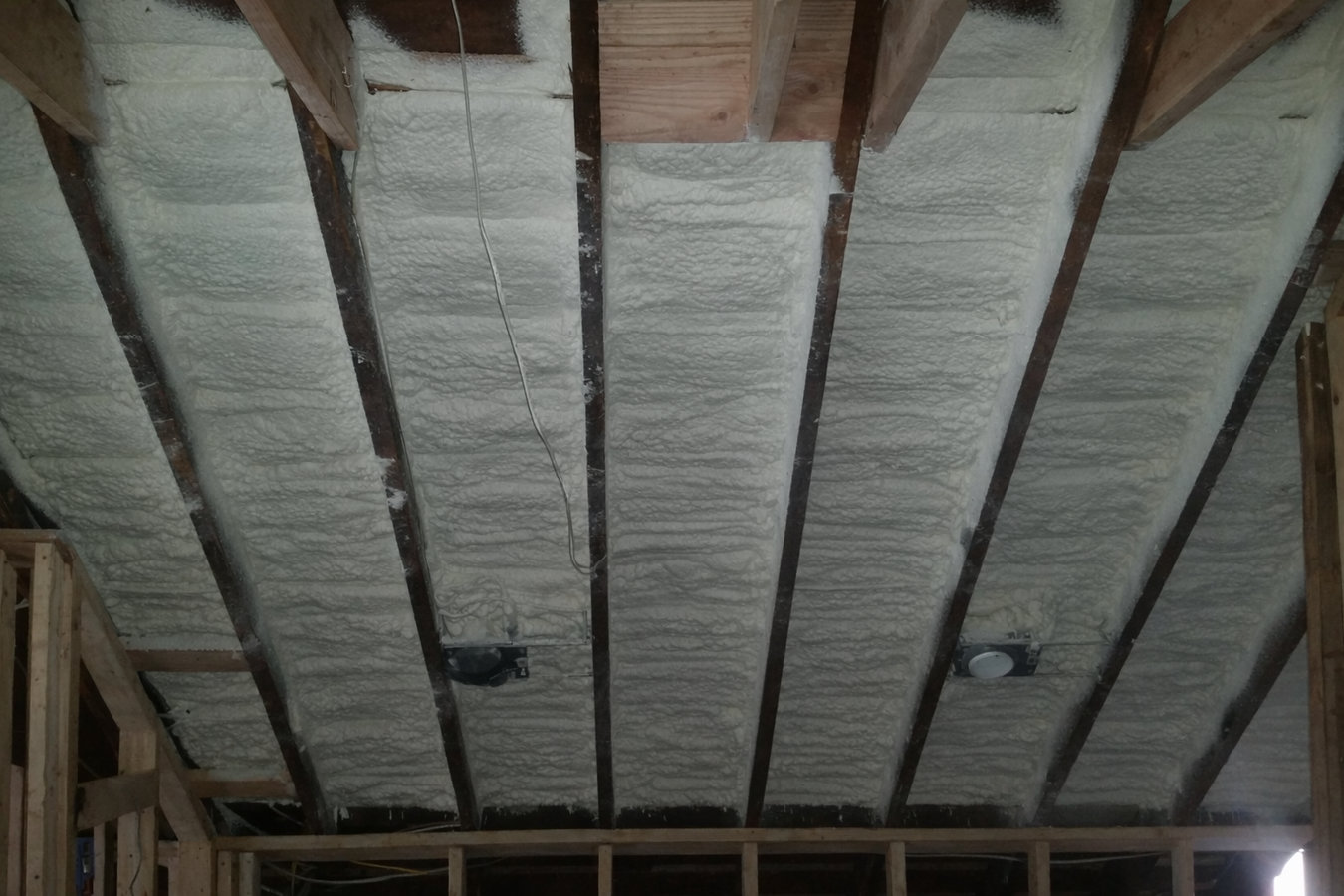
Brownwood summers are long and punishing. Closed-cell spray foam seals air gaps and insulates in one step, so your home holds a consistent temperature without your air conditioner running all day.
Closed-cell foam insulation in Brownwood, TX is sprayed on as a liquid and expands into a hard, airtight layer that bonds to any surface - sealing air gaps and providing thermal resistance in a single step, with most residential jobs completed in one day.
Unlike fiberglass batts or blown-in insulation, closed-cell foam does not settle, sag, or absorb moisture. It hardens permanently and creates a near-airtight barrier that stops conditioned air from leaking out and outside air from sneaking in. That combination is what makes it so effective in Brownwood's climate, where summers are long and air conditioning runs for months at a time. Pairing it with spray foam insulation services gives you a complete picture of all foam options available for your home.
Homeowners in Brownwood's older neighborhoods often find that upgrading to closed-cell foam - particularly in the attic and crawl space - makes a more dramatic difference than expected because the baseline insulation was so low to begin with. A free assessment tells you where you stand before you commit to anything.
If your cooling costs climb every June and stay high through September, your home is losing conditioned air through gaps or poorly performing insulation. In Brownwood's climate, a well-insulated home should hold a consistent temperature without the air conditioner running almost constantly.
If a bedroom, back addition, or room above the garage is consistently warmer than the rest of the home, that space almost certainly has an insulation or air-sealing problem. This is especially common in older Brownwood homes where additions were built at different times with different insulation standards.
Brownwood's spring winds and occasional wildfire smoke events test how well-sealed your home is. If you can smell smoke or notice fine dust on surfaces after a windy day, outside air is coming in through gaps in your walls, attic, or crawl space - and your cooled air is going out the same way.
In a Brownwood summer, an uninsulated or under-insulated attic can reach extreme temperatures, and that heat radiates down through the ceiling into your living space. If your ceiling feels warm to the touch on a hot afternoon, the attic insulation is not doing its job.
We apply closed-cell foam in attics, crawl spaces, basement and foundation walls, rim joists, and exterior wall cavities. Each area has a different installation approach - attic work often involves spraying the underside of the roof deck to create a hot-roof assembly that dramatically reduces attic temperatures in Brownwood's summers. For crawl spaces and foundation areas, foam seals both air and moisture in one pass, often eliminating the need for a separate vapor barrier. If you are also comparing foam types, see our open-cell foam insulation page for a breakdown of when each approach makes the most sense.
Every job starts with a walk-through of the areas to be insulated, a check for moisture and existing damage, and a written estimate that breaks down cost by area. We also verify whether a permit is needed for your specific project - some closed-cell foam work near mechanical systems requires one. The goal is no surprises before, during, or after the job.
Best for homes with high attic temperatures and ceiling heat radiation - foam applied to the underside of the roof deck keeps the attic dramatically cooler.
Best for homes with cold floors or moisture concerns - foam seals cracks in concrete or block walls and insulates in a single application.
Best for homes with floor-level drafts - the rim joist area where your floor meets the foundation is one of the most common air leakage spots in older Brownwood homes.
Best for new construction or major renovations - foam fills wall cavities completely, eliminating the gaps and settling that batts develop over time.
Brownwood sits in West-Central Texas, where summers regularly climb above 100 degrees F and the air conditioning runs for five to six months of the year. That sustained heat puts enormous pressure on any insulation system. Closed-cell foam's ability to block both heat transfer and air infiltration makes it especially well-suited here - it addresses both problems at once, which is why homeowners often see a more noticeable drop in utility bills compared to insulation that only adds thermal resistance. The clay-heavy soils across Brown County also cause homes to shift subtly over the years, opening small gaps in walls, around window frames, and at the roofline. Closed-cell foam bonds tightly to surfaces and can seal those gaps as part of the installation.
Brownwood homeowners are served by Oncor Electric Delivery, and residential electricity costs in Texas have been subject to significant volatility in recent years. Reducing monthly cooling costs through better insulation is one of the few home improvements that pays back a portion of its cost every month. Homes in areas like Coleman, TX and Comanche, TX face the same climate conditions and benefit from the same approach.
We reply within one business day. Tell us the basic details - which areas you want insulated and any comfort problems you have noticed - so we show up prepared to give you an accurate assessment.
We measure the areas, assess existing insulation, and look for air leaks and moisture issues. You get a written estimate broken down by area - labor and materials separated - with a clear explanation of what we recommend and why.
You, your family, and your pets need to be out of the home during spraying and for at least 24 hours after. We give you a specific re-entry time before work starts. Clear access to the areas being insulated is all the prep you need.
We show you the finished work, point out the thickness achieved in each area, and answer any questions before we go. Most residential jobs in a typical Brownwood home are completed in a single day.
Free estimate, written quote, no obligation. We reply within one business day.
(325) 510-3392Foam sprayed too thin in a single pass cures unevenly and loses both its insulating and air-sealing value. We use a depth gauge to verify thickness as we go and show you the results - you know the job was done right before we leave.
The EPA's spray polyurethane foam guidelines are clear about re-entry timing after installation. We follow them and give you a specific re-entry window before work begins - no guessing, no rushing the curing process.
We work on Brownwood homes every week. We understand the shifting clay soils, the mid-20th century construction methods, and the comfort problems that come with homes that were built well before modern energy codes. That context shapes every recommendation we make.
Every job starts with a free on-site assessment and a written estimate that spells out the work, the materials, and the total cost. We document the before-and-after condition of the space, so you have a clear record of what was done from start to finish.
Every proof point above reflects what it takes to install spray foam correctly in a Brownwood home - not just get the job done, but get it done in a way you can trust for the life of your house. Call or submit a request to schedule your free assessment.
A softer, lower-density foam option that works well for interior walls and areas where vapor permeability is preferred over a hard moisture barrier.
Learn MoreAn overview of all spray foam options - both open and closed cell - to help you choose the right material for each area of your home.
Learn MoreBrownwood cooling season starts early - schedule your free assessment now and lock in your installation date.